Coconut Grove · 7 min read
Coconut Grove Garden Design: Privacy, Shade and Tropical Planting
Coconut Grove is known for its green, shaded character: streets under dense canopy, houses partly hidden by vegetation, gardens that feel more discovered than displayed.
A garden here invites a planting-led approach. The aim is often intimacy — a private world within the city — without losing light, air or a sense of space.
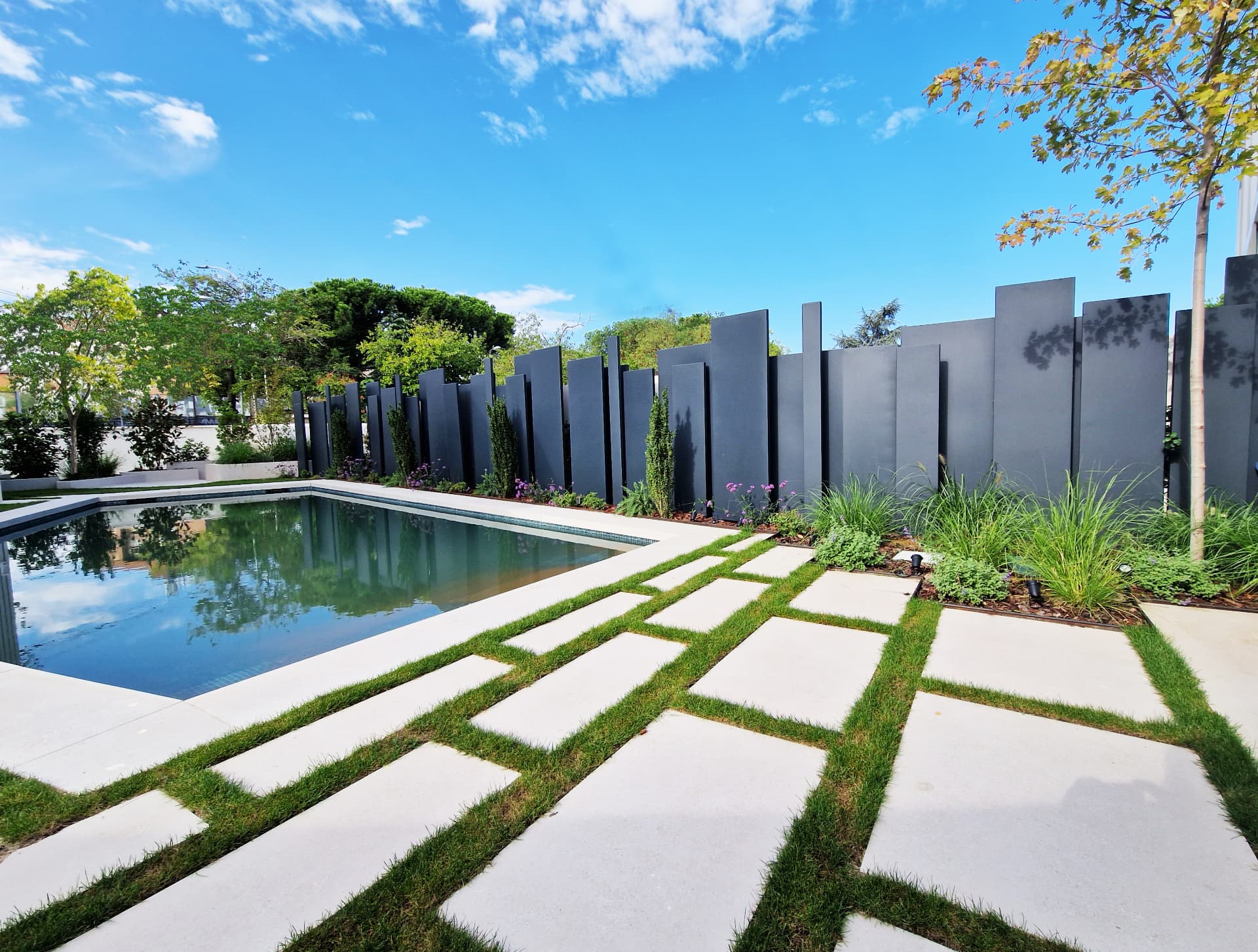
Nistal Landscape Design portfolio, Spain.
Begin with the existing vegetation
Many properties in the Grove already have mature trees and established planting. Before adding anything, it is worth understanding what is there: which trees give the best shade, which views they frame, which areas are too dark and which are too exposed.
A new garden that works around a mature canopy immediately feels part of its surroundings. Decisions about removing or protecting trees depend on each property and should be confirmed with local specialists and the relevant authorities.
Privacy through layers, not walls of hedge
A flat perimeter hedge is the quickest route to privacy, but it tends to make a garden feel like a box. Layered planting gives a different result.
Tall trees screen views from upper floors; mid-height shrubs and palms block the line of sight at eye level; lower planting in front gives depth. Because the layers sit at different distances, the boundary becomes hard to read, and the garden feels larger than it is.
Enclosure without feeling small
The paradox of an intimate garden is that it should feel sheltered and spacious at the same time. Framed views help: an opening in the planting towards a specimen tree, the water or a lit wall draws the eye further and extends the perceived space.
Clear open areas — a lawn, a terrace, the surface of a pool — matter as much as the planting around them. Without them, dense planting becomes overwhelming.
Tropical planting with restraint
Tropical plants are generous, and it is tempting to use too many of them. The result is often a collection rather than a garden.
Architectural foliage and softer planting
A few bold, sculptural leaves read beautifully when set against finer, softer planting. Repeating a limited number of species creates rhythm and lets the strongest plants stand out.
Texture before color
In a shaded garden, texture and shades of green usually carry the composition. Flowers become accents, not the structure.
Garden rooms and moments of discovery
Dense planting makes it possible to divide a garden into distinct places: a shaded seating area, an outdoor dining terrace, a quiet corner with a single bench.
Paths that turn rather than run straight reveal these spaces gradually. The experience of walking through the garden becomes part of its character.
Pools within the planting
In a lush garden, a pool can feel less like a feature placed on a lawn and more like water found within vegetation. Planting brought close to the edge, with enough distance for maintenance and safety, creates that effect.
Shade, leaf litter and circulation all need thought; our article on designing a pool and garden in Miami covers the wider decisions.
Outdoor dining and shaded seating
In the Grove, the most used spaces are usually the shaded ones. Dining areas under a canopy or a pergola, seating tucked beneath trees, and a covered terrace close to the kitchen make the garden part of daily life rather than a view.
Between the house and the garden
Naturalistic transitions suit this setting: planting that reaches up to the terrace, paving that softens into gravel or stepping stones, doors that open directly into green. The line between architecture and garden becomes gentle rather than sharp.
Light after dark
Night lighting within dense planting should be subtle. Uplighting a few trees, grazing a textured wall and marking paths at low level creates depth without turning the garden into a stage. The goal is to see shapes and shadows, not every plant.
Humidity, rainfall and local coordination
A shaded, densely planted garden holds moisture. Air circulation, drainage and plant spacing matter, especially during the wet season. We discuss these conditions in our guide to Miami’s tropical climate.
Irrigation, drainage, structural and permitting questions are coordinated with local professionals who know the ground and the regulations. Our role is to set the design direction and keep it consistent through every stage of landscape design for Miami homes.