Tropical garden design · 7 min read
How to Design a Garden for Miami’s Tropical Climate
A garden in Miami is not a European garden with more palms. The light is stronger, the air is heavier, the rain arrives differently and plants grow at a pace that would surprise most gardeners in Madrid or London.
For a studio used to Mediterranean summers, the first lesson is simple: climate is not a restriction to work around. In South Florida it becomes part of the design language itself — it decides where shade falls, how water moves, which materials last and how a family actually uses the garden through the year.
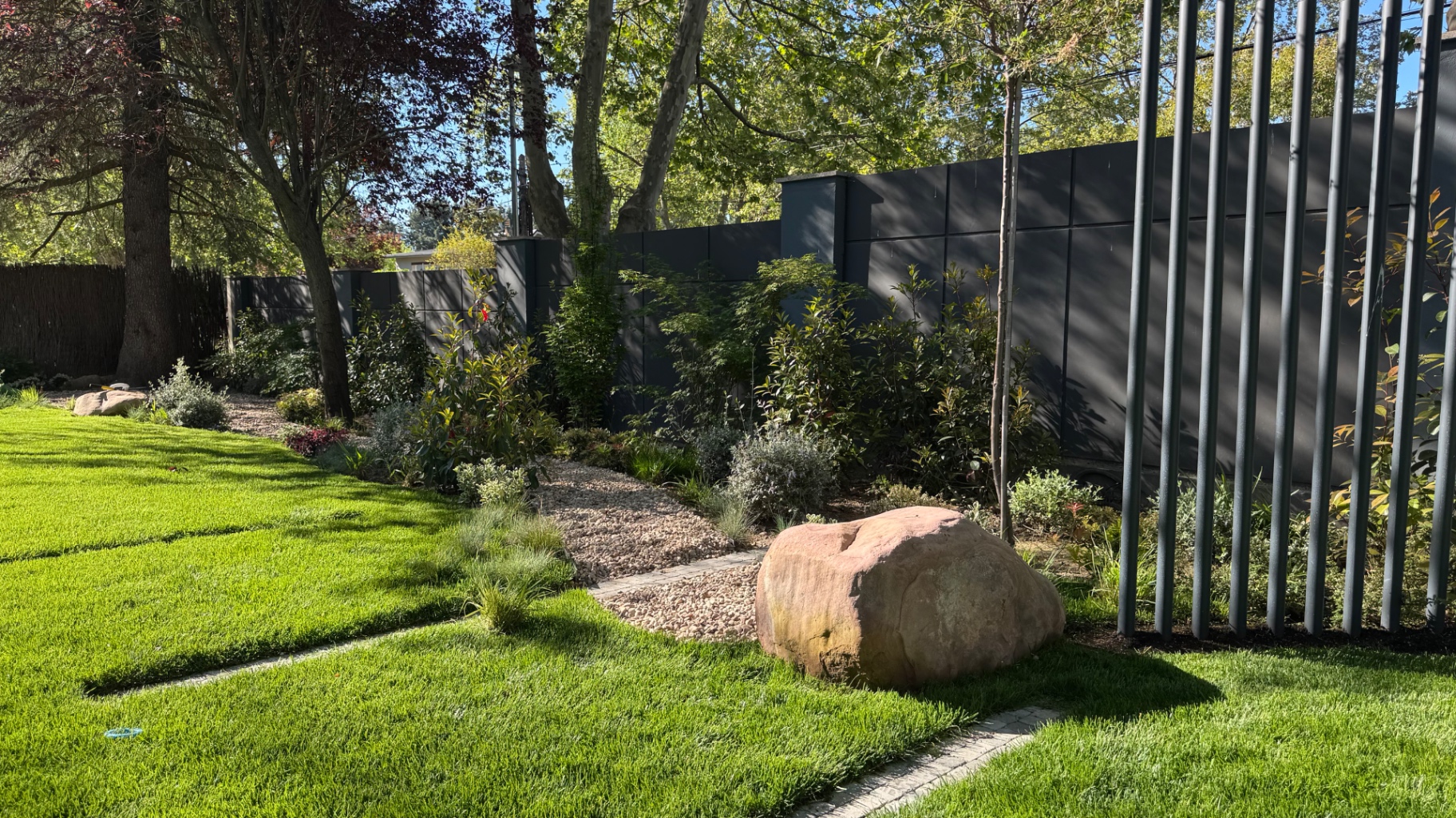
Nistal Landscape Design portfolio, Spain.
Understand the climate before drawing anything
South Florida sits at the edge of the tropics. Winters are mild and dry; summers are long, hot and humid, with frequent afternoon storms. Hurricane season runs from June to November.
Each of these conditions has design consequences. A layout that looks balanced on paper can feel exposed at two in the afternoon in July, or turn into standing water after a summer downpour. We prefer to read the site first — orientation, prevailing winds, existing trees, the way water currently drains — and let those observations shape the plan.
Shade is the first building material
In a temperate climate, a garden is often designed to capture sun. In Miami, the priority is usually the opposite: creating comfortable shade so that outdoor spaces are genuinely usable.
Shade can come from many sources, and the best gardens combine several of them.
Canopy trees
A well-placed canopy tree does more than any umbrella. It lowers the temperature beneath it, filters light and gives the garden a sense of permanence. Where mature trees already exist, they are often the most valuable element on the property and deserve to be designed around.
Architectural shade
Pergolas, loggias, deep overhangs and covered terraces extend the house into the garden. Their proportions should relate to the architecture, so that they read as part of the building rather than as furniture added later.
Design for water, not against it
Heavy seasonal rainfall means drainage cannot be an afterthought. Levels, falls, permeable surfaces and planted areas that can absorb water should be part of the concept from the beginning.
Handled well, water management can shape the garden positively: gravel margins, planted swales and generous beds give rain somewhere to go while adding texture. Technical solutions always depend on the individual property and should be developed with local engineers and contractors who know the soil and regulations.
Wind, storms and coastal exposure
Wind and storm exposure influence both planting and construction. Trees need space for healthy roots, structures need appropriate fixing, and loose elements should be kept to a minimum.
On coastal properties, salt spray adds another layer. Plants and materials close to the water must tolerate it; more sensitive planting can then be placed in the protected areas the house and the first layers of vegetation create.
Privacy without enclosure
Many Miami homes sit close to their neighbors, and privacy is often a priority. The instinct is to plant a tall, continuous hedge around the boundary. It works, but it can make a garden feel boxed in.
We prefer layers: a mix of trees, shrubs, screens and lower planting at different depths. Layered boundaries block views where it matters while still letting light and air through, and they make a plot feel larger rather than smaller.
Planting in layers, with structure first
Tropical planting can easily become a collection of striking individual plants that never quite form a composition. The answer is structure.
We start with the permanent framework — canopy trees, larger structural plants, clear masses — and only then add the finer layers of texture, foliage and flower. Contrast between broad leaves and fine ones, between glossy and matte, between sculptural forms and soft ones, often does more than color.
This is not about producing a long plant list. It is about deciding what the garden should feel like, and choosing a limited palette that expresses it consistently.
Materials that belong outdoors
Sun, humidity and rain are demanding on exterior materials. Paving needs to stay comfortable underfoot and safe when wet; timber, metal and stone need to age well rather than simply look good on the day of installation.
A restrained palette — a few materials repeated across terraces, paths and walls — usually looks calmer and more considered than many different finishes. Ideally, it also relates directly to the materials of the house.
Architecture, pool and landscape as one project
In South Florida, outdoor living happens for most of the year, so the garden is effectively part of the home. The relationship between interior rooms, terraces, the pool and the planting should be resolved together.
This is the core of residential landscape design in Miami: the pool is placed where it works with views and shade, terraces follow the lines of the house, and planting frames rather than decorates. We explore this in more detail in our article on designing a pool and garden in Miami.
Design for maturity, not for installation day
Plants in Miami grow quickly. A garden that looks full on the day it is completed can feel crowded within two or three years.
It is better to plant with the future in mind: leave space for trees to develop, accept that the first months will look lighter, and plan maintenance so the garden becomes more beautiful as it matures. A good tropical garden should feel settled after a few seasons, not overgrown.
Climate as design language
When the climate is understood, it stops being a list of problems. Shade becomes atmosphere, rain becomes texture, and the pace of growth becomes an opportunity to create a garden that feels established far sooner than it would in Europe.
That is the approach we bring to every project: the site and its climate first, then a clear structure, then the details.